

When it comes to heavy-duty construction and industrial work, wheel loaders stand out as the powerhouse machines that bring both strength and versatility to loading, handling, and stockpiling tasks. In industries like mining, construction, and agriculture, wheel loaders offer the efficiency and durability needed to get the job done. For Australian businesses, investing in reliable equipment is essential for long-term productivity and minimal downtime.
Table of Contents
The Versatile Power of Wheel Loaders
Wheel loaders have become indispensable in various industries due to their robust structure and adaptability. These machines are designed to tackle challenging jobs such as material handling, transporting heavy loads, and stockpiling. Thanks to their impressive lifting capacity, wheel loaders can load materials into dump trucks, transport heavy items, and even clear sites quickly and efficiently.
Wheel loaders are also engineered for easy maneuverability, even in tight spaces, allowing operators to execute tasks with precision. With a range of attachments available, including forks, buckets, and grapples, wheel loaders can perform an array of jobs, making them ideal for businesses that require multi-functional machinery.

Benefits of Wheel Loaders for Loading, Handling, and Stockpiling
Superior Lifting Capacity
Wheel loaders are built to handle substantial weights, making them a top choice for loading and handling applications. The bucket capacity on wheel loaders is typically larger than other types of loaders, allowing operators to move more material in a single load. This efficiency is particularly valuable in industries that need to move large volumes quickly, such as mining and construction.
Enhanced Maneuverability
In tight spaces and narrow work environments, wheel loaders provide exceptional control and precision. The advanced steering and control features enable operators to navigate confined spaces, which is especially beneficial in urban construction sites or on narrow roads. The agility of these machines helps to boost productivity while reducing the risk of accidents or collisions.
Fuel Efficiency and Cost Savings
Modern wheel loaders are designed with fuel-efficient engines, which can lead to significant savings on operational costs. By reducing fuel consumption without compromising performance, wheel loaders help businesses meet sustainability targets and improve their overall operational efficiency. For Australian companies mindful of environmental impact, this fuel efficiency is an added advantage.
Stability and Operator Comfort
Stability is paramount in heavy-duty work environments, and wheel loaders are designed with a low center of gravity to ensure secure operation, even on uneven terrain. Additionally, manufacturers prioritize operator comfort, integrating ergonomic cabins, advanced controls, and excellent visibility to enhance safety and productivity on the job.
Wide Range of Attachments
A variety of attachments can be used with wheel loaders, transforming them into multi-functional machines. From buckets for bulk material handling to forks and grapples for lifting and carrying, wheel loaders offer a flexible solution for different operational needs. This adaptability allows businesses to invest in fewer machines while still meeting all their loading, handling, and stockpiling requirements.
WA70M-8E0 Wheel Loader
The WA70M-8E0 is a compact, hydrostatic-drive wheel loader designed for versatility and fuel efficiency. With a bucket capacity of 1.0 cubic meters and an engine power of 46.2 kW (62 HP), it is ideally suited for a range of loading and material-handling tasks. This model handles diverse applications in general building, construction, stockpiling, and local government projects. Its integrated design allows key components to function seamlessly, ensuring optimal performance and reliability. Additionally, it comes equipped with a remote monitoring and location system, supported by a comprehensive nationwide service network.
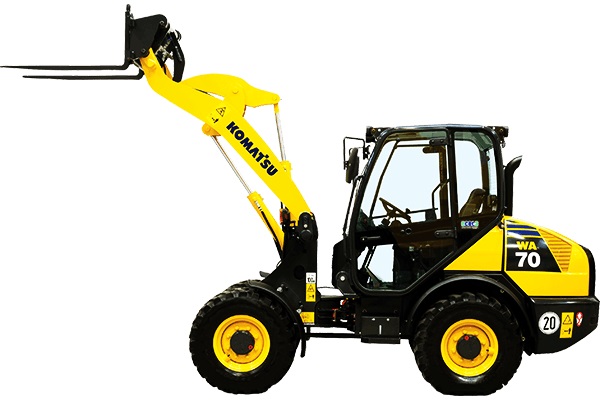
Key Features:
- Engine Power: 46.2 kW (62 HP) for efficient performance
- Operating Weight: 5,300 kg, providing stability and maneuverability
- Bucket Capacity: 1.0 cubic meters, perfect for small to medium tasks
- Hydrostatic Drive: For smooth operation and fuel savings
- Remote Monitoring System: Offers location tracking and operational insights
- Comprehensive Support: Backed by a nationwide service network
WA100M-8E0 Wheel Loader
The WA100M-8E0 wheel loader delivers enhanced power, productivity, and ease of maintenance, with an engine power of 69.8 kW (94 HP) and a bucket capacity ranging from 1.05 to 1.8 cubic meters. This hydrostatic-drive model is designed to handle multiple materials across various industries, providing reliable performance and operational efficiency. It features an advanced remote monitoring and location system that facilitates maintenance and tracking, with complete support available through an extensive service network.
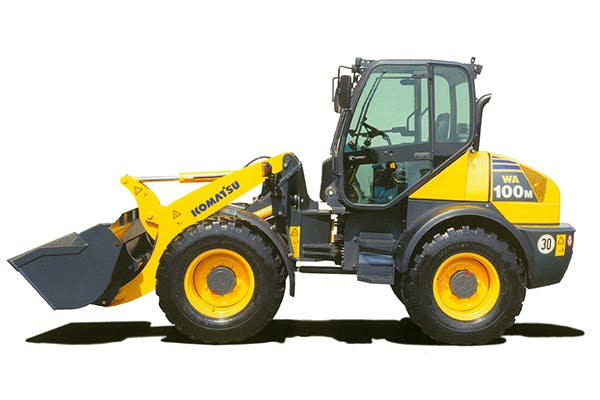
Key Features:
- Engine Power: 69.8 kW (94 HP) for superior loading capability
- Operating Weight: 7,065 kg, ensuring balanced and stable operation
- Bucket Capacity: 1.3 cubic meters, versatile for various materials and tasks
- Hydrostatic Drive: Enhances operational efficiency and ease of control
- Remote Monitoring System: Allows for real-time monitoring and diagnostics
- Nationwide Service Support: Ensures reliable maintenance and technical assistance
WA150-6 Wheel Loader
The WA150-6 wheel loader is built for high productivity with minimal fuel consumption, featuring a powerful 73 kW (98 HP) engine and a bucket capacity of up to 1.7 cubic meters. This loader offers efficient operation with a hydrostatic drive that supports smooth material handling across diverse applications. Its components are designed to work in harmony, maximizing reliability and performance. The model also comes with a remote monitoring and location system, providing maintenance and tracking benefits with support from a wide-reaching service network.
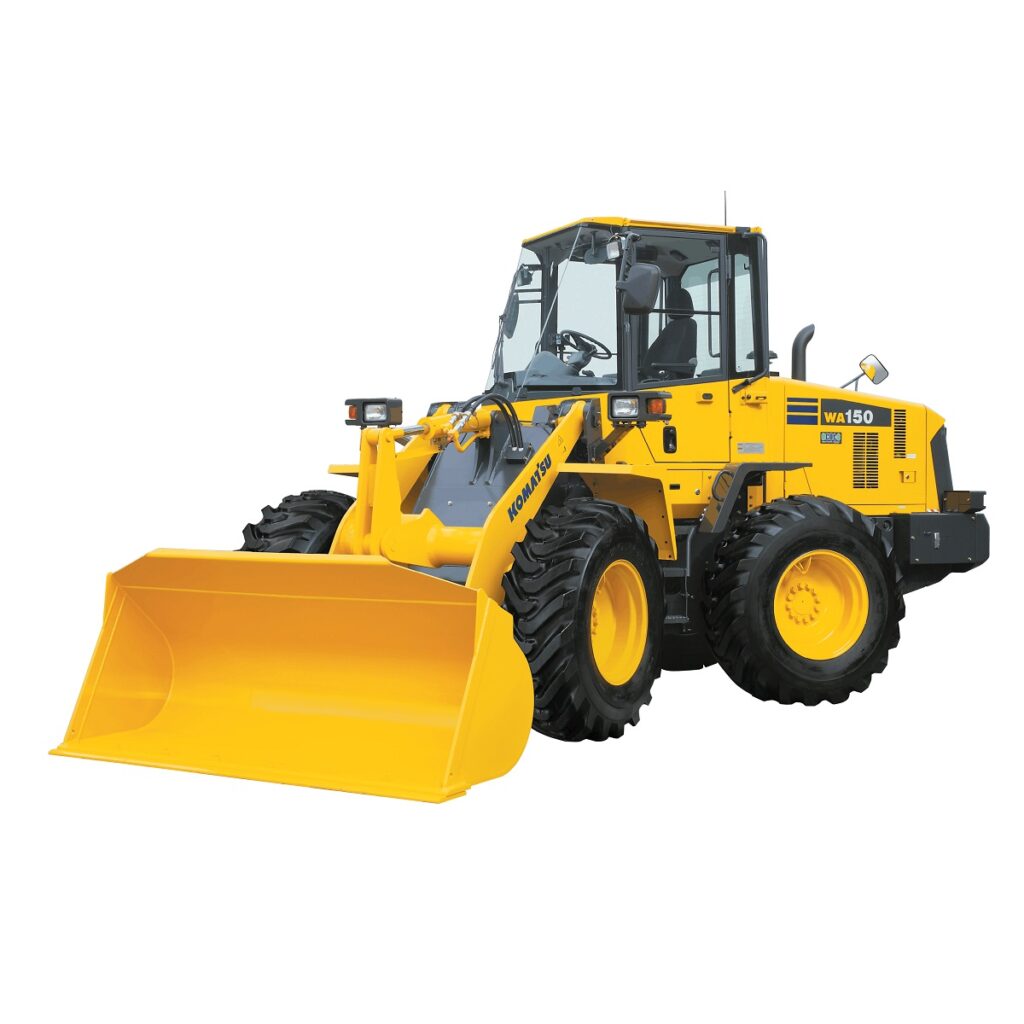
Key Features:
- Engine Power: 73 kW (98 HP) for robust performance in demanding applications
- Operating Weight: 7,780 kg, offering enhanced stability and durability
- Bucket Capacity: 1.7 cubic meters, ideal for larger tasks and high-volume material handling
- Hydrostatic Drive: Ensures efficient fuel usage and smooth operation
- Remote Monitoring System: Tracks loader location and operational status
- Extensive Support Network: Ensures comprehensive service and maintenance
FAQs
What makes wheel loaders ideal for loading, handling, and stockpiling?
Wheel loaders are engineered with powerful lifting capacities, precise maneuverability, and versatility, which make them ideal for loading, handling, and stockpiling in heavy-duty environments. Their ability to work with a wide range of attachments enhances their functionality, allowing them to handle different types of materials with ease.
How do wheel loaders support cost savings?
Wheel loaders are designed to be fuel-efficient, which helps reduce operational costs over time. Their multi-functional nature also means businesses can use fewer machines for different tasks, which can lead to savings on both equipment purchases and maintenance.
Which wheel loader is best suited for tight spaces?
The Komatsu WA70M-8E0 is a compact model that offers exceptional maneuverability, making it ideal for operating in confined spaces. Its agility and advanced control system enable it to perform tasks with precision, even in smaller or crowded work environments.
Are wheel loaders suitable for rough terrains?
Yes, wheel loaders are built for stability and can operate efficiently on rough terrains. Models like the WA150-6 are designed with a low center of gravity and robust frame to ensure stable performance even on uneven ground, making them suitable for a range of applications.
What attachments can be used with wheel loaders?
Wheel loaders can be equipped with various attachments, such as buckets for material handling, forks for lifting, and grapples for carrying bulky items. This versatility allows wheel loaders to adapt to multiple tasks, reducing the need for additional machinery on site.